
Manufacturing Two-Way Radios
Proven Radios for Factory Safety
In the high-demand environment of modern production, real-time coordination is the engine of operational efficiency. From managing raw material intake on the loading dock to coordinating assembly lines and CNC machining centers, production timelines rely on instant, unbroken communication. Implementing professional manufacturing two-way radios ensures your plant managers, floor supervisors, and maintenance technicians remain continuously linked under a single, highly reliable network.
At Teltra, we engineer, deploy, and support robust industrial wireless communication infrastructure customized for fabrication plants, packaging facilities, and heavy manufacturing environments. From installing localized repeaters that penetrate thick metal structures to deploying noise-canceling headsets for high-decibel zones, we provide the underlying framework that eliminates dead zones and keeps your production lines running safely.

ENHANCE YOUR PRODUCTION LINE WITH CUSTOM FACTORY COMMUNICATION SOLUTIONS!

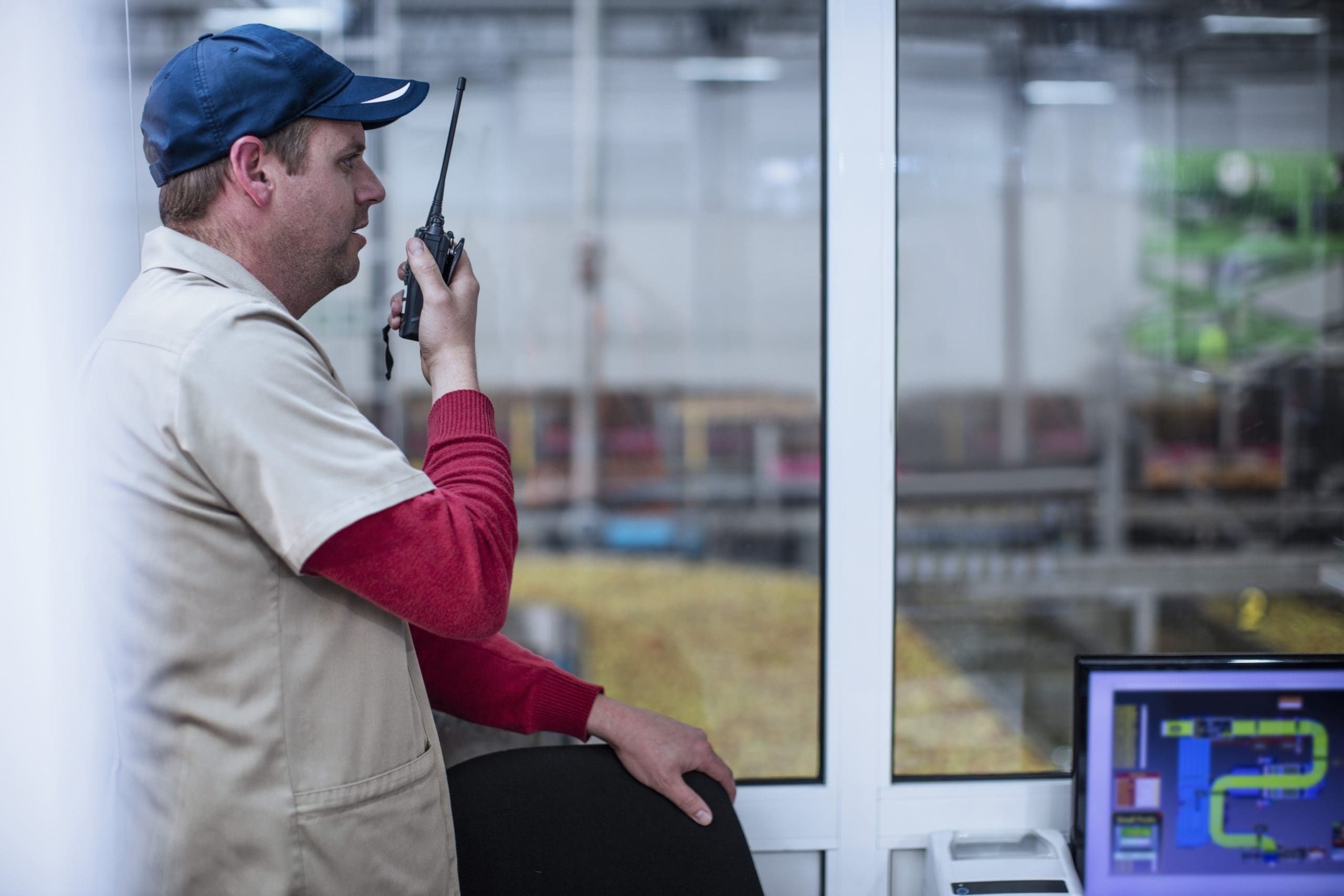
The Core of Industrial Wireless Communication
Managing a commercial manufacturing plant presents distinct physical, acoustic, and regulatory hurdles. Standard consumer electronics routinely fail to meet the rigorous demands of an active factory floor. To maintain high operational standards and adhere to strict safety protocols, your factory radio systems must overcome several critical realities:
-
Massive Structural Interference: Manufacturing plants are dense structures filled with reinforced concrete, thick firewalls, and massive steel machinery. These materials naturally absorb and reflect standard radio frequencies (RF), creating severe communication blind spots.
-
Extreme Acoustic Interference: The constant mechanical roar of stamping presses, conveyor belts, and heavy transport vehicles requires communication hardware equipped with aggressive, industrial-grade active noise-cancellation to isolate human vocals.
-
Harsh Environmental Exposure: Equipment deployed on the factory floor must withstand daily exposure to heavy metallic dust, airborne lubricants, extreme temperature fluctuations, and physical impacts.
Why Factory Radio Systems Outperform Mobile Phones
Relying on mobile phones in an active production facility introduces significant operational vulnerabilities. Cellular networks frequently drop signals inside metal-clad warehouses, and touchscreens are difficult to operate with heavy protective work gloves. Conversely, professional manufacturing two-way radios operate on dedicated frequencies, delivering instantaneous push-to-talk connectivity that bypasses commercial cellular grids entirely and features large, tactile buttons designed for gloved hands.
5 Engineering Standards for Manufacturing Two-Way Radios
When selecting equipment for industrial environments, Teltra focuses on specific engineering metrics that guarantee reliability and longevity. We prioritize the following five technical standards for manufacturing deployments:
| Engineering Standard | Operational Benefit | Ideal Manufacturing Application |
| 1. Active Noise Suppression | Filters out heavy machinery and engine roar for crystal-clear voice clarity. | Stamping plants, CNC machining zones, and assembly lines. |
| 2. High-Power Indoor Penetration | Pushes signals through reinforced concrete, steel doors, and metal shelving. | Warehousing, inventory storage, and sub-level maintenance rooms. |
| 3. IP67/IP68 Ingress Protection | Completely blocks fine metallic dust, chemical splashes, and withstands washdowns. | Food processing, chemical manufacturing, and heavy fabrication. |
| 4. Extended Battery Chemistry | Delivers 16 to 24 hours of continuous power on a single charge. | Multi-shift continuous operations and 24/7 production schedules. |
| 5. Integrated Safety Telematics | Automatically triggers structural alerts via Man-Down sensors and Lone Worker timers. | Isolated maintenance technicians and forklift operators. |
Custom Network Infrastructure Engineered by Teltra
Teltra provides comprehensive engineering support to optimize your manufacturing two-way radios. We do not believe in unconfigured, out-of-the-box hardware. Our team designs network architectures that fit the precise architectural layout and operational flow of your specific plant.
Distributed Antenna Systems (DAS) for Metal Structures
For sprawling production campuses spanning multiple buildings and dense metal infrastructure, standard radio-to-radio signals will quickly degrade. Teltra solves this by erecting and programming localized repeaters and Distributed Antenna Systems (DAS). Placed strategically throughout the facility, these systems capture and re-broadcast your signal, ensuring total coverage from the front office to the deepest inventory warehouse.
Regulatory Frequency Coordination
Operating high-power commercial radios at a manufacturing plant requires strict adherence to federal communication laws to avoid interfering with neighboring industrial facilities. Teltra manages the entire
Workplace Safety and OSHA Compliance Integration
A structured wireless network is a mandatory element of your site-specific safety plan. High-decibel manufacturing environments must adhere to occupational safety limits, such as the
Manufacturing Two-Way Radios: Frequently Asked Questions
Why choose manufacturing two-way radios over cell phones for the factory floor?
Mobile phones introduce severe dialing delays, easily lose coverage inside metal-clad warehouses, and lack the durability needed for heavy industry. Professional manufacturing two-way radios deliver immediate, dedicated push-to-talk connectivity, feature specialized noise reduction, and operate on managed private networks optimized for maximum in-building coverage.
How do industrial wireless communication systems penetrate heavy steel machinery?
Thick steel equipment and dense inventory racks naturally block radio waves. Teltra bypasses these structural barriers by engineering localized digital repeaters and Distributed Antenna Systems (DAS). This equipment acts as an internal network, catching radio signals and routing them around physical obstructions to ensure 100% facility coverage.
Can factory radio systems protect isolated maintenance workers?
Yes. Commercial-grade factory radio systems can be programmed with digital safety telematics. Features like "Lone Worker" require technicians to periodically check in, while "Man-Down" gyroscopic sensors automatically transmit an emergency alarm if the radio detects that the worker has fallen and remains motionless.

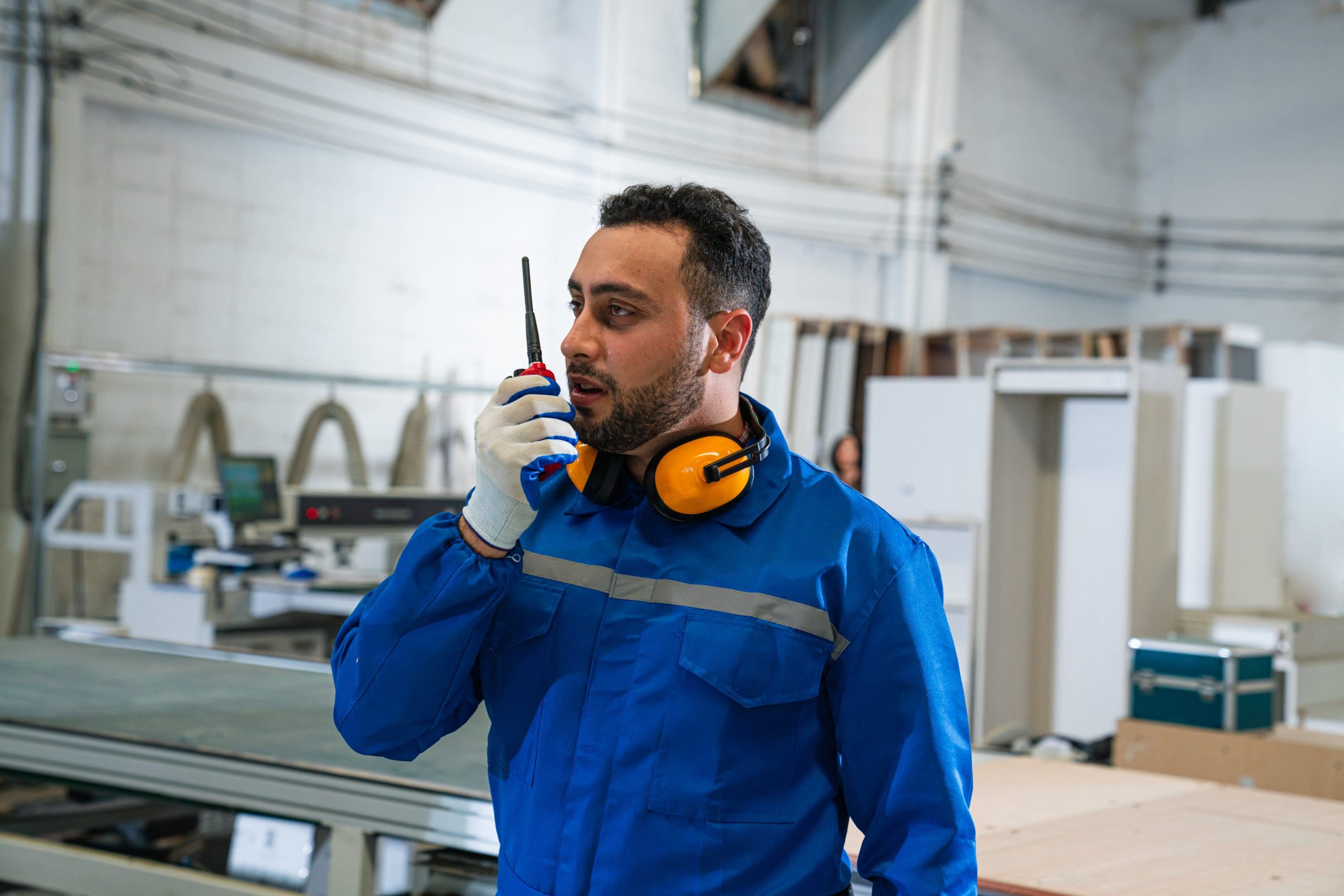
Ready to talk?
Contact Teltra today to discuss your facility hardware needs and learn more about the technical, acoustic, and regulatory compliance requirements for your next industrial wireless communication deployment.