Dispatch and GPS Tracking
Powerful Fleet Management Upgrades
Integrated Dispatch and GPS Tracking solutions revolutionize fleet management by combining real-time location analytics with instantaneous, mission-critical voice communications. By embedding highly accurate GPS receivers directly into rugged digital transceivers, fleet managers and dispatchers gain complete, live visibility over their mobile workforce via centralized dispatch software.
This unified system eliminates the need for separate cellular tracking hardware, operating seamlessly over secure, private Land Mobile Radio (LMR) networks or Push-to-Talk over Cellular (PoC) platforms. Deploying a combined dispatch and GPS solution significantly increases operational efficiency and response speeds. Dispatchers can instantly route the closest unit to a job site, monitor transit speeds, and review route histories to reduce fuel costs. Furthermore, this technology drastically elevates worker safety; if an emergency occurs, field personnel can trigger an alarm that instantly transmits their exact geographic coordinates to the dispatch center, ensuring rapid, precise assistance when every second counts.
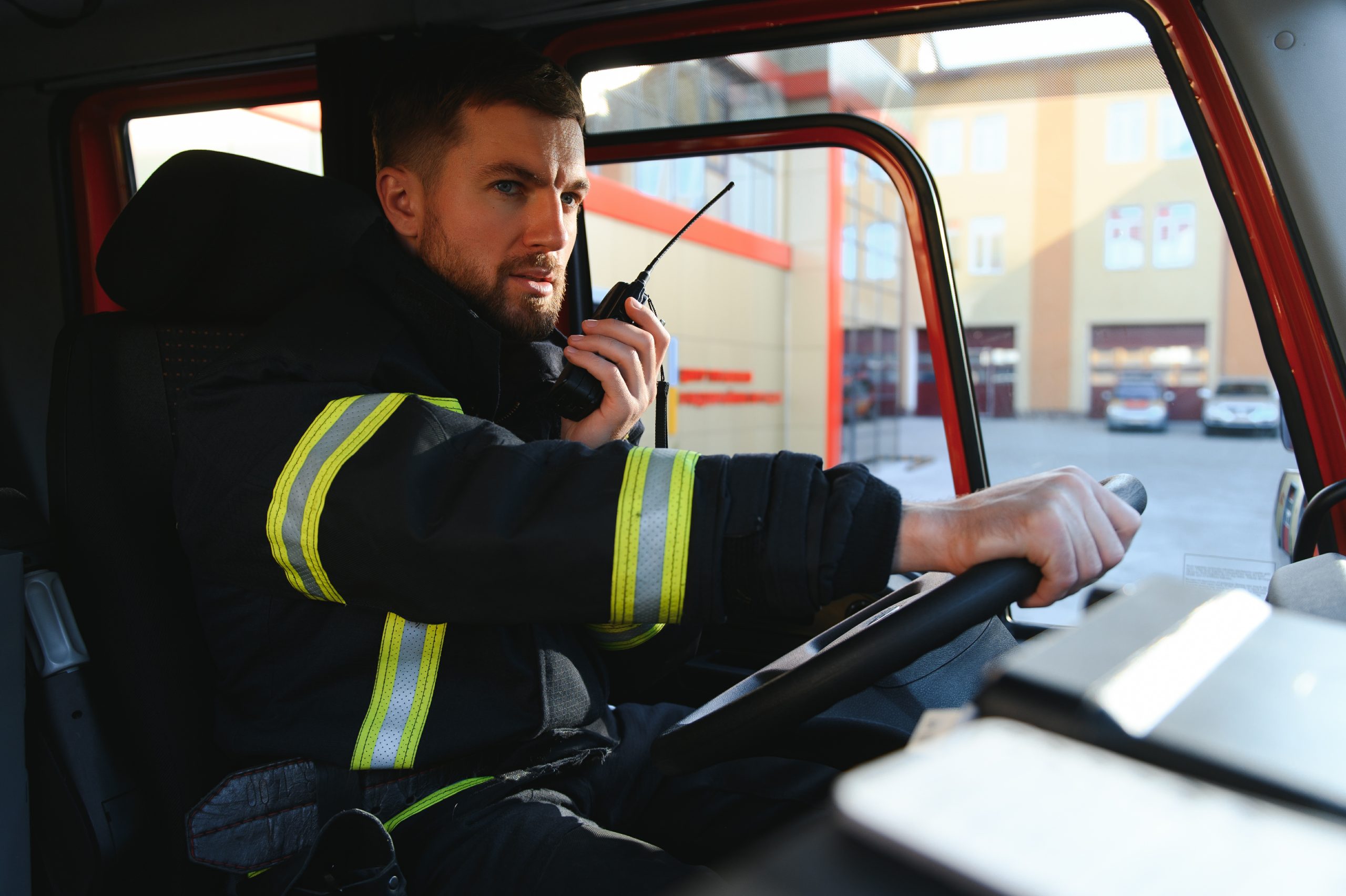
TAKE CONTROL OF YOUR FLEET WITH ADVANCED DISPATCH SOFTWARE!

The Core of Integrated Fleet Management
Historically, logistics and security companies had to manage two completely separate systems: a voice radio network for talking, and a third-party cellular GPS system for tracking vehicles. This approach is costly, prone to cellular dead zones, and limits the tracking strictly to the vehicle—if a worker leaves the truck with their radio, the dispatcher loses their location.
Modern integrated two-way radio dispatch software solves this by transmitting GPS telemetry data directly over the radio frequency itself. This unified architecture delivers three distinct operational advantages:
-
Visual Voice Dispatching: Instead of calling into the blind, a dispatcher can look at a live digital map, identify the radio closest to an incident, click on their specific icon, and instantly initiate a private voice call.
-
Complete Network Independence: By transmitting location data over your private digital radio network, you maintain real-time fleet location tracking even in remote areas where commercial cell service is completely nonexistent.
-
Personnel-Level Tracking: Because the GPS chip is embedded in the portable radio clipped to the worker’s belt, you track the actual person, not just the truck they drove.
5 Engineering Standards for Dispatch and GPS Tracking
When outfitting a command center, Teltra focuses on engineering metrics that guarantee operational visibility, safety, and efficiency. We prioritize the following five technical standards for all software dispatch deployments:
| Engineering Standard | Operational Benefit | Ideal Dispatch Application |
| 1. Real-Time Location Telemetry | Transmits precise geographic coordinates at pre-programmed intervals without interrupting voice traffic. | Regional couriers, public transit fleets, and school buses. |
| 2. Automated Geofencing | Triggers visual and audio alerts when a radio enters or leaves a predefined geographic boundary. | Secure facility perimeters, delivery zones, and hazardous areas. |
| 3. Route History Logging | Records historical travel paths, idle times, and transit speeds to help optimize future routing and fuel use. | Cross-country trucking, waste management, and heavy equipment transport. |
| 4. Emergency Alarm Mapping | Instantly pings and highlights the exact location of a worker who triggers a Man-Down or SOS button. | Remote utility workers, prison guards, and lone security personnel. |
| 5. Comprehensive Voice Recording | Automatically logs, timestamps, and records all network voice traffic for liability and training reviews. | Police 911 dispatch, EMS triage, and casino security operations. |
Custom Dispatch Infrastructure Engineered by Teltra
Teltra provides comprehensive engineering support from the initial server configuration to the final installation of dispatch consoles. We do not just provide software licenses; we engineer a complete command center ecosystem tailored to your operational workflow.
Dispatch Software Configuration
Integrating a dispatch console into a digital radio network requires precision IT networking. Teltra engineers handle the complete installation of dispatch software (such as Hytera SmartOne or similar enterprise platforms). We configure the server infrastructure, map your talkgroups, establish custom geofences, and train your command staff on how to seamlessly manage hundreds of field units from a single screen.
Elevating Lone Worker Safety
For utilities, oil & gas, and industrial manufacturing, worker safety is paramount. Our Dispatch and GPS Tracking solutions are heavily customized for life-safety. We program portable radios with "Man-Down" gyroscopic sensors and "Lone Worker" check-in timers. If a worker falls or fails to check in, the radio automatically transmits an emergency alert. Back at the command center, the dispatcher's screen flashes red, an audible alarm sounds, and the digital map instantly zooms in on the exact coordinates of the fallen worker.
Streamlining Logistics and Fuel Costs
Inefficient routing burns fuel and wastes valuable time. By utilizing the route history and live speed monitoring features of our integrated systems, fleet managers can conduct data-driven audits of their operations. Dispatchers can identify drivers who are idling excessively, taking unauthorized detours, or speeding, allowing management to enforce policies that dramatically lower overhead costs.
Dispatch and GPS Tracking: Frequently Asked Questions
What is integrated two-way radio dispatch?
Integrated two-way radio dispatch combines standard voice communications with advanced software features on a PC console. It allows a dispatcher to manage multiple radio channels, send text messages, record voice traffic, and view the live geographic location of all users on a single centralized map.
Does GPS tracking work over radio networks without cellular data?
Yes. Digital Mobile Radio (DMR) systems can transmit GPS coordinates using the radio's data channel. This means that as long as the radio has a connection to your private repeater network, the dispatcher will receive real-time fleet location updates—even in remote rural areas or deep inside industrial parks where standard commercial cell phones lose service.
How does GPS integration improve worker safety?
When an emergency occurs, field personnel often do not have the time—or the situational awareness—to verbally explain their location. With integrated GPS, pressing a dedicated SOS button on the radio instantly transmits their exact coordinates to the dispatch software, allowing rescue teams to be routed directly to the injured or threatened worker without any guesswork.


Ready to talk?
Contact Teltra today to discuss upgrading your command center with modern dispatch software. Learn more about the technical advantages of real-time GPS telemetry, hardware requirements, and IT integration for your next enterprise deployment.