
Agriculture Two-Way Radios
Proven Radios for Farm Efficiency
In the commercial farming and agribusiness sectors, reliable communication across vast acreage is essential for managing daily operations, protecting personnel, and securing crop yields. Whether you are coordinating a fleet of combine harvesters, managing seasonal field workers, or overseeing complex irrigation networks, implementing professional agriculture two-way radios ensures your entire workforce remains connected under a single, unified network.
At Teltra, we engineer, deploy, and support robust wireless infrastructure tailored specifically for the agricultural industry. From setting up localized repeater towers for sprawling rural properties to configuring nationwide cellular-based networks for transport logistics, our solutions eliminate dead zones and keep your agricultural operations running smoothly.
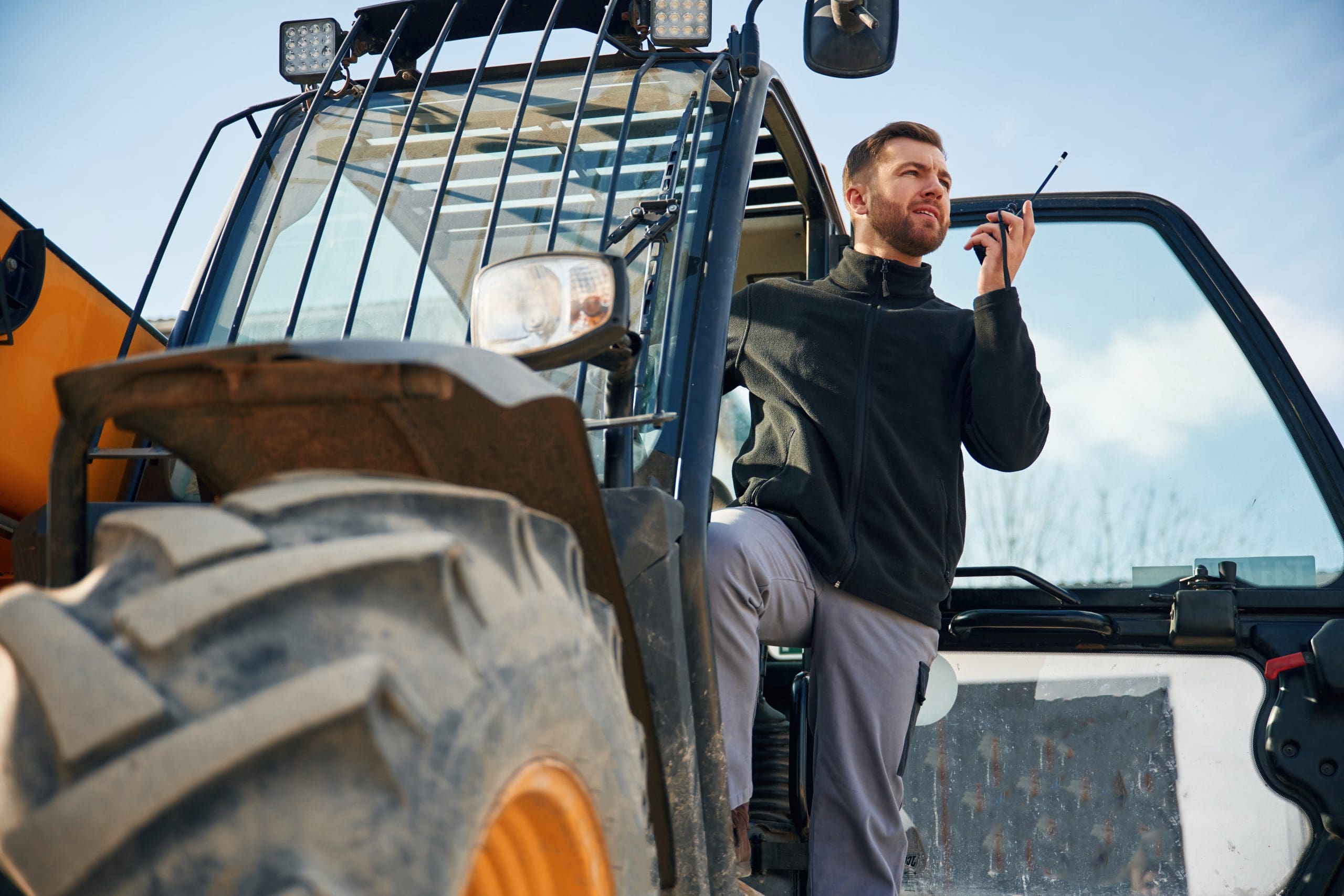
ENHANCE YOUR FARM OPERATIONS WITH CUSTOM AGRICULTURE COMMUNICATION SOLUTIONS!


The Core of Modern Farm Communication Systems
Managing a commercial farm presents distinct logistical and environmental hurdles. Standard consumer electronics routinely fail to meet the rigorous demands of agricultural environments. To maintain operational efficiency and adhere to standard safety protocols, your farm communication systems must overcome several critical realities:
-
Massive Geographic Footprints: Rural farms often stretch across thousands of acres, routinely pushing beyond the limitations of standard consumer cellular towers.
-
High-Decibel Environments: The roar of diesel tractors, grain dryers, and heavy transport trucks requires communication hardware engineered with aggressive industrial noise-cancellation technology.
-
Severe Environmental Exposure: Agricultural equipment must withstand daily exposure to heavy dust, soil, intense ultraviolet sunlight, chemical fertilizers, and sudden torrential rain.
Why Long-Range Radios for Farming Outperform Cell Phones
Relying on mobile phones in remote agricultural zones introduces significant operational vulnerabilities. Cell service in rural areas is notoriously unreliable, and the devices themselves are fragile. Conversely, long-range radios for farming operate on dedicated frequencies—often amplified by private on-site repeaters—delivering instantaneous push-to-talk connectivity that does not rely on third-party commercial cellular grids.
5 Engineering Standards for Agriculture Two-Way Radios
When selecting equipment for agribusiness, Teltra focuses on specific engineering metrics that guarantee a long-term return on your investment. We prioritize the following five technical standards for agricultural deployments:
| Standard | Operational Benefit | Ideal Agricultural Application |
| 1. High-Power RF Output | Penetrates dense crop canopies, rolling hills, and wooded perimeters. | Large-scale row crop farming and timber management. |
| 2. IP67/IP68 Durability | Completely blocks fine dust ingress and survives full water submersion. | Irrigation management, livestock handling, and field tilling. |
| 3. Extended Battery Chemistry | Delivers 16 to 24 hours of continuous power on a single charge. | Extended harvest seasons and dawn-to-dusk planting shifts. |
| 4. Digital Noise Suppression | Filters out heavy machinery engine noise for crystal-clear voice clarity. | Tractor operators, combine drivers, and processing facility staff. |
| 5. GPS Telematics | Allows dispatchers to track the exact coordinates of workers and assets. | Managing large fleets of seasonal workers across massive acreage. |
Comprehensive Network Infrastructure by Teltra
When selecting equipment for agribusiness, Teltra focuses on specific engineering metrics that guarantee a long-term return on your investment. We prioritize the following five technical standards for agricultural deployments:
Digital Repeater Topologies
For farms spanning miles of uneven terrain, standard radio-to-radio signals will eventually degrade. Teltra solves this by erecting and programming high-power digital repeaters. Placed on silos, barns, or high-elevation points, these systems capture and re-broadcast your signal, ensuring total coverage across your property.
Regulatory Frequency Coordination
Operating high-power commercial radios requires strict adherence to federal communication laws. Teltra manages the entire
Push-to-Talk over Cellular (PoC) for Logistics
If your agribusiness includes a fleet of transport trucks moving produce from the farm to distant processing plants, we deploy Push-to-Talk over Cellular (PoC) networks. This allows your dispatchers to communicate with long-haul drivers hundreds of miles away using the exact same radio interface used by your local field workers.
Agriculture Two-Way Radios: Frequently Asked Questions
What are the main benefits of farm communication systems?
Professional farm communication systems provide instant, reliable voice transmission that does not depend on unpredictable rural cell towers. They improve worker safety, accelerate equipment dispatching, and feature rugged enclosures designed to survive the mud, water, and drops common on agricultural sites.
How do long-range radios for farming cover thousands of acres?
To cover massive agricultural properties, long-range radios for farming are paired with localized digital repeaters. By installing a repeater with a high-gain antenna on a tall structure—such as a grain elevator—the system catches the portable radio signal and amplifies it across the entire geographic footprint.
Do agriculture two-way radios require a specialized license?
Yes. Commercial-grade agriculture two-way radios operate on private frequencies that must be licensed by the federal government to prevent cross-talk with neighboring farms or local emergency services. Teltra manages this entire licensing and frequency coordination process on your behalf.

Ready to talk?
Contact Teltra today to discuss your job site hardware needs and learn more about the environmental and regulatory compliance requirements for your next agricultural deployment.